Rain does not have to ruin a camping trip. With a little preparation, a wet weekend can be peaceful and cozy: the sound on the tent, fresh smells in the forest and quieter campgrounds. The trick is keeping yourself and your sleeping gear dry, and having a plan for spending time at camp.
Check the forecast and conditions
Look at the forecast a few days ahead and again before you leave. Light rain is manageable with the right gear, but heavy storms, strong winds, lightning or flood warnings are a good reason to change your plans. Check for any alerts from the park or campground, and know where you would go if conditions got worse.
Pitch your tent for rain
Where and how you pitch your tent has the biggest impact on staying dry.
- Choose higher ground that drains well, and avoid hollows, dry creek beds and areas below slopes.
- Use a footprint or groundsheet, but tuck its edges under the tent so it does not catch water and funnel it underneath.
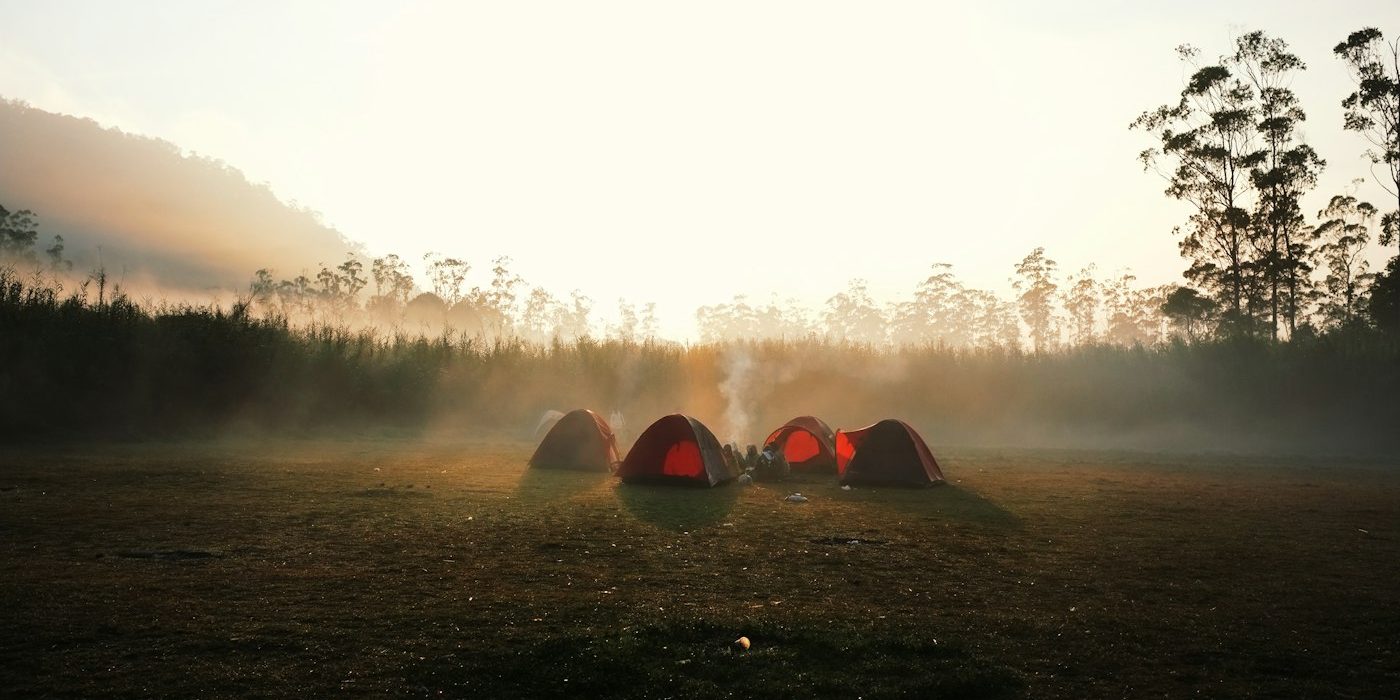
- Pitch the rainfly tightly and stake out all guylines so the fly does not touch the inner tent.
- Face the door away from the wind.
- If you can, pitch in a dry spell and put the fly on first if your tent design allows it.
A taut rainfly is a dry rainfly. Take an extra five minutes to tension every guyline, and check them again before bed.
Set up a dry living space
Spending a whole afternoon inside the tent can get old quickly. A tarp creates a sheltered area where you can cook, eat, play cards and sit outside without getting soaked.
- Rig the tarp with one side lower than the other so water runs off rather than pooling.
- Use trekking poles or adjustable poles for height, with guylines staked firmly.
- Set up the tarp over your table or kitchen area.
- Check the tarp regularly and push water off before it collects.
Never cook inside a tent, even in heavy rain. Cook under a well-ventilated tarp shelter instead, with plenty of open space around the stove.
Keep your gear dry
Once something gets wet, it can be hard to dry out until you get home. Protect the gear that matters most.
- Pack sleeping bags and spare clothes in dry bags or plastic bags.
- Keep electronics in waterproof pouches.
- Store wet gear, boots and rain jackets in the tent vestibule, not inside the sleeping area.
- Bring extra towels and a few spare bags for wet items.
Dress for wet weather
Good rain gear keeps you comfortable and lets you enjoy time outdoors even when it is wet.
- A waterproof jacket with a hood
- Waterproof pants, especially in cooler conditions
- Waterproof footwear or quick-drying shoes and plenty of spare socks
- Synthetic or wool layers that stay warm when damp
- A dedicated set of dry clothes for sleeping only
Cold and wet together can lower your body temperature faster than you might expect. Change out of wet clothes promptly, eat warm food and keep a dry warm layer ready.
Manage condensation
Even in a dry tent, condensation can make things damp. Breathing and wet gear add moisture to the air inside.
- Open vents to keep air moving.
- Keep wet gear out of the inner tent.
- Wipe down the inside walls with a small cloth in the morning.
Things to do on a rainy day
Rain is a good excuse to slow down. Pack a few things to keep everyone entertained.
- Card games, board games or a puzzle
- A good book or a downloaded audiobook
- A short walk in the rain with good gear on, staying on safe, well-marked trails
- Cooking something special, like hot cocoa or a slow-simmered stew
- Visiting a nearby town, museum or visitor center
Packing up wet
Sometimes you have to pack up in the rain. Shake off as much water as you can, pack the tent separately from dry gear and keep a large bag or bin for wet items. When you get home, set the tent up or hang it to dry completely as soon as possible to prevent mildew and damage.
Embrace the weather
Some of the most memorable camping trips happen in less-than-perfect weather. With the right preparation, a rainy weekend can be just as rewarding as a sunny one. Gear up, stay dry and enjoy the quiet.

We test ideas on real weekends outside — camp, trail and open road — and share what makes trips simpler and more comfortable.